
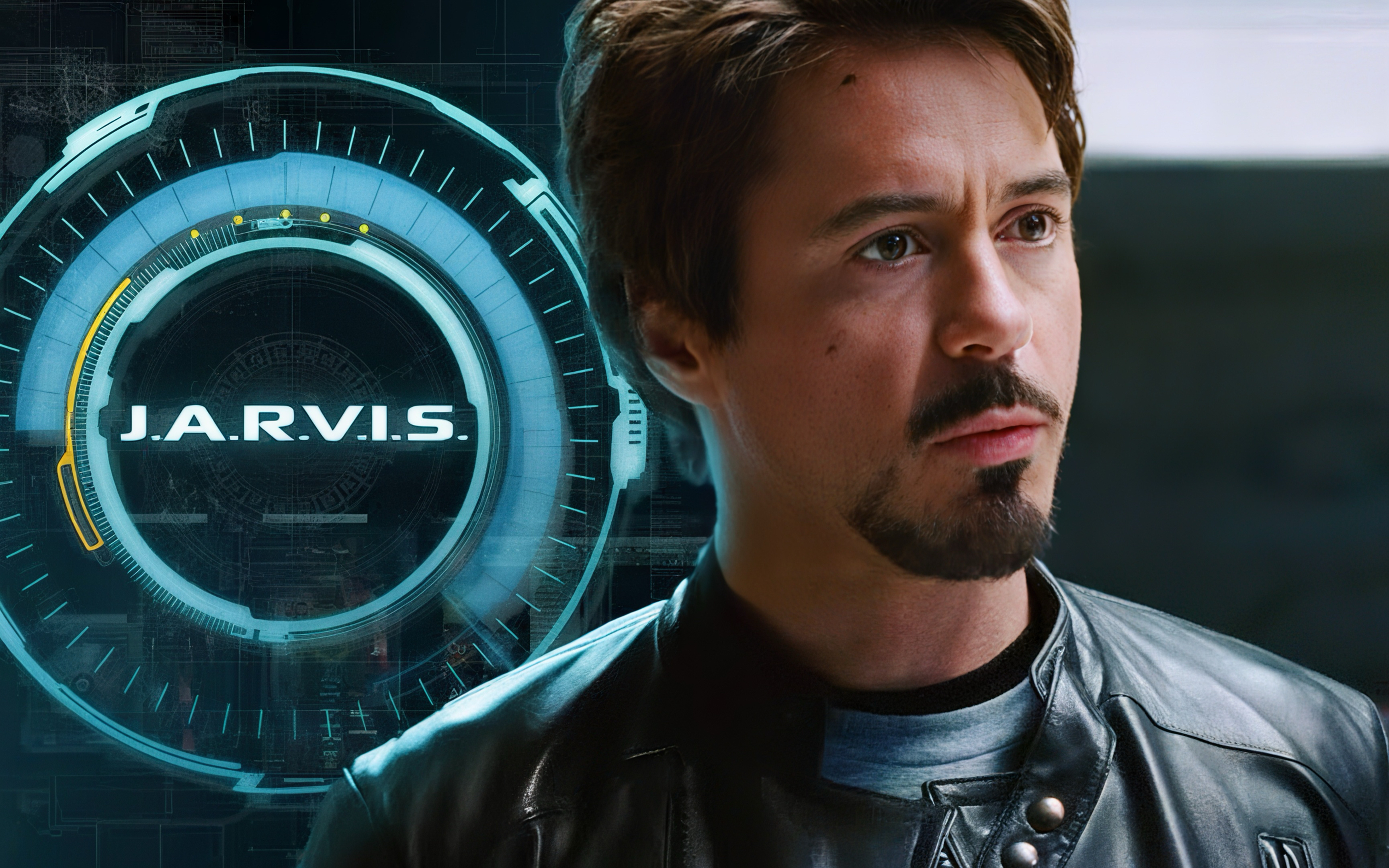
When people imagine an AI like JARVIS from Iron Man, they usually imagine an intelligence that can see, listen, understand language, reason about situations, and control the world around it. The impressive part is not that JARVIS can answer a question. It is that Tony Stark can say something, and the system can turn that instruction into an action.
That distinction is becoming increasingly important in real-world robotics. A robot can recognize an object, describe a room, and have a surprisingly natural conversation with you — but none of those capabilities guarantee that it can reliably interact with the physical world. This is where the difference between VLM and VLA becomes important.
VLM: Giving AI a Way to See and Understand
A Vision-Language Model (VLM) connects visual information with language. It can look at an image or video, identify objects, understand relationships between them, and respond to questions about what it sees.
For example, a VLM might understand:
“There is a glass on the table next to the laptop.”
That is already a major step beyond traditional computer vision. The system is no longer simply detecting pixels or labeling objects. It can connect visual information with language and reasoning.
But there is an important limitation.
Understanding what is happening is not the same as knowing how to physically respond.
If you tell the robot, “Bring me the glass,” recognizing the glass is only the beginning.

VLA: Connecting Understanding to Action
A Vision-Language-Action (VLA) model is designed to take this process further by connecting visual perception and language with physical actions.
The robot needs to determine which glass you mean, locate it in three-dimensional space, plan how to reach it, control its arm and hand, grasp it without dropping it, and bring it to the correct location.
And the real world rarely stays still.
Someone might move the glass. The table might be crowded. The object might be heavier than expected. The robot might approach from the wrong angle. Its first attempt might fail.
This is where embodied intelligence becomes fundamentally different from a chatbot.
The robot does not simply need to understand the world. It needs to continuously act, observe the result, and adjust.
The Hardest Part Is Not Intelligence. It Is Reliability.
This is also why saying “VLA makes a robot intelligent” is an oversimplification.
VLMs can provide powerful perception and reasoning. VLA approaches can connect those capabilities to action. But a robot operating in a home has to deal with an unpredictable physical environment, where even a small mistake can change the outcome.
That means the real challenge for bionic embodied intelligent robots is not simply building a larger model.
It is creating a reliable loop between:
seeing → understanding → deciding → acting → observing → correcting.
A conversational AI can give you the right answer and stop there.
A robot cannot.
When AI moves beyond the screen and into the physical world, intelligence is no longer measured only by what a system understands, but by what it can reliably do with that understanding.
And that may be the real difference between an AI that looks intelligent — and a robot that actually behaves intelligently.
0 comments
Leave a comment